
Blog
What Is Festbier and Why You Ought to Drink It Now

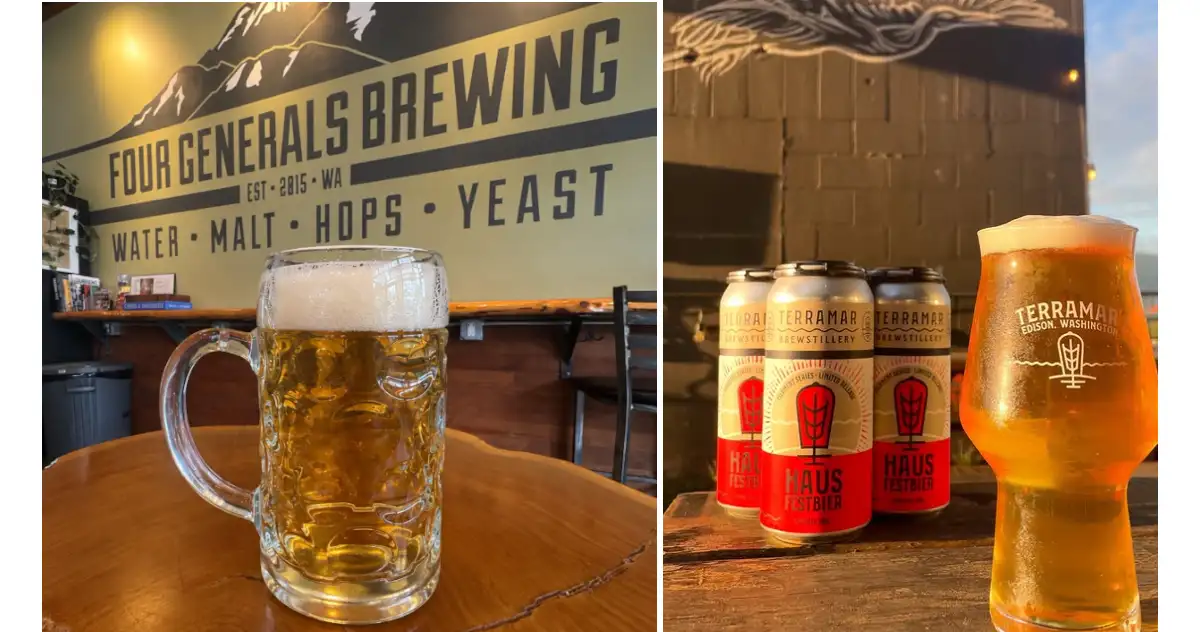
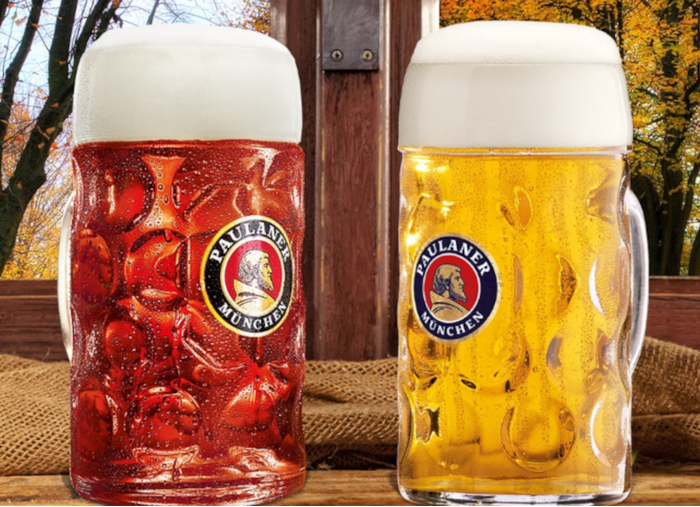
Not way back, craft-brewed lagers had been uncommon within the USA. That’s modified. In the present day, rattling close to each brewery produces numerous types of lager, and the listing contains Festbier. The upcoming Harvest Fest in Seattle on September twenty sixth, introduced by the Washington Brewers Guild, will showcase the complete beer bounty of Washington, and that features Festbier. Craft brewers throughout the Pacific Northwest have upped their recreation with regards to this fashion, assisted partly by the supply of the top quality grains that make an excellent Festbier actually shine. When you’re not but, it’s time to get conversant in this fashion of beer. (Above: two of my favourite, domestically brewed Festbiers.)
So, is Festbier an precise beer fashion, or only a catch-all time period for beers brewed for Oktoberfest season? Quick reply: sure. It’s each of these issues. But it surely shouldn’t be. Let me clarify.
Glorious examples of Washington-brewed Festbier
This fashion owes a lot of its character to the standard of the malted barley used to brew it. Listed here are two of my favourite native examples of the fashion, every lends particular, although barely totally different, consideration to the grain.
—4 Generals Brewing in Renton ,Washington, is an award-winning brewer of genuine German-style beers. To brew its Festbier, brewmaster Ross makes use of malted barley imported from Germany (BESTMALZ). 4 Generals hosts its Oktoberfest celebration this Saturday, September nineteenth (beginning at 3 pm). That’s an incredible alternative to get into certainly one of my favourite Festbiers.
—Terramar Brewstillery in Bow, Washington, serves up its Haus Festbier as a matter after all. The brewery makes use of nothing however Washington-grown malted barley in all of its beer (LINC Malt and Chilly Stream Malt). Laze away the hours within the Terramar beer backyard with a stunning “home beer” in hand; at all times a good way to spend the day.
How Festbier Turned Oktoberfest’s Finest-Stored Not-So-Secret
Festbier has nothing to do with Oktoberfest and it additionally has every little thing to do with Oktoberfest. This time of yr, issues present up on faucet lists and within the beer aisles labeled as Festbier, Oktoberfestbier, Oktoberfest Märzen, Oktoberfest Lager, or any mashup of these phrases. Order two “Oktoberfest” beers and so they may look and style wildly totally different. Even esteemed German brewers like Paulaner supply two vastly totally different beers that say Oktoberfest on the label.
So what provides? Let’s break down Festbier, Märzen, and Oktoberfestbier — what they’re, how they relate, and the place they differ — so you’ll be able to observe down the competition beer you truly need. As a result of I believe the one most American craft beer shoppers need is Festbier.
TL;DR
- Märzen — the historic Oktoberfest beer. Amber, malty, toasty, dry end. What most, however not all, American “Oktoberfest” beers are modeled on.
- Festbier (Fest Bier) — the trendy Oktoberfest beer. Golden, clear, lighter-bodied, constructed for consuming by the liter. What Munich’s breweries truly serve at Oktoberfest right this moment.
- Oktoberfestbier — a authorized designation, not a taste profile. Solely six Munich breweries can use the title. It’s what they pour below these massive tents: Festbier.
- Oktoberfest Märzen Festbier Lager — one thing I simply made as much as illustrate my level.
Right here’s an occasion the place you’ll be able to examine the outdated Oktoberfest-style beer with the brand new Oktoberfest-style beer. Together with different treats, Harvest Fest in Seattle on Saturday, September twenty sixth will characteristic a variety Fest Biers/Oktoberfest/Märzens from native breweries like: 7 Seas Brewing, Aslan Brewing, Weird Brewing, Chuckanut Brewery, Dru Bru, Georgetown Brewing, Kulshan Brewing, Logan Brewing, Stoup Brewing, Valholl Brewing, and extra.
Märzen: The OG Oktoberfest Beer
Märzen (German for “March”) acquired its title the old style approach: it was brewed in March, saved it in darkish, cool cellars or caves all summer time, and by autumn, it was prepared. The beer of alternative at harvest festivals. It was the beer served on the very first Oktoberfest, a public celebration in 1810 marking the wedding of Crown Prince Ludwig of Bavaria (quickly to be King Ludwig I). For the subsequent 150 years, for those who had been consuming at Oktoberfest, you had been consuming Märzen. It’s not what you’d drink there right this moment.

It’s nonetheless what runs by way of my head after I see “Oktoberfest” on a label: amber-red, malty, a bit of candy up entrance, dry on the end. In different phrases, Märzen. It’s the fashion most American brewers, however not all, are chasing once they slap the phrase “Oktoberfest” on something. Most stateside variations land between 5.5 and 6.5 % ABV.
Festbier: The Beer That Changed It
Right here’s the place it will get complicated: Munich’s breweries don’t truly serve Märzen at Oktoberfest anymore. Beginning within the Nineteen Seventies, town’s six competition breweries started quietly swapping their Märzen-style beers for one thing extra quaffable. By the Nineteen Nineties, Festbier was the norm. In the present day, the phrase “Oktoberfest” pertains to two issues: the large beer competition in Munich and a method of beer that isn’t served at that competition.
The Beer Judging Certification Program (BJCP) defines the Festbier as follows. General Impression: A easy, clear, pale German lager with a reasonably sturdy malty taste and a light-weight hop character. Deftly balances power and drinkability, with a palate impression and end that encourages consuming. Showcases elegant German malt flavors with out changing into too heavy or filling. Look: Deep yellow to deep gold coloration; shouldn’t have amber hues. Shiny readability. Persistent white to off-white foam stand. Most business examples are medium gold in coloration.
In comparison with Märzen, these new choices had been much less intensely malty — pale, golden lagers with a cleaner, crisper end, due to using lighter malts and the additional hop character that balances out the sweetness. Festbier is golden, not amber. Lighter, not as candy. Constructed particularly for the competition grounds, which is how they earned the title Festbier. Most clock in round 6 % ABV.
For beer drinkers in the US, Festbier is extra approachable — a lot nearer to what American drinkers would name a Helles. Or an adjoining, much less frequent fashion known as Dortmunder. A lot of the Festbier I run into domestically, brewed within the Pacific Northwest, tends to be a bit extra sturdy than a real Helles, if nowhere close to as malt-forward as a Märzen. Backside line: a correct Festbier needs to be gold, not amber, and lighter on malty sweetness than a Märzen. No ensures, although — your mileage might differ from brewery to brewery.
Oktoberfestbier: Like Champagne, Solely Totally different
Then there’s Oktoberfestbier — much less a taste profile than a authorized, or regional, designation. Consider it because the Champagne of beer. Sorry, Miller Excessive Life. Solely six breweries inside Munich metropolis limits are allowed to pour on the competition grounds and use the title Oktoberfestbier: Hofbräu, Augustiner, Löwenbräu, Paulaner, Spaten, and Hacker-Pschorr. Nowadays, what they’re pouring is a Festbier. So “Oktoberfestbier” and “Festbier” are, for all sensible functions, the identical golden lager — the previous is a protected designation, the latter a method class.
Why This Confuses Individuals within the U.S.
Stateside, we don’t play by Munich’s guidelines, and that’s the place issues get muddled. American breweries are free to name something “Oktoberfest,” and most, however not all, imply the old-school amber Märzen: wealthy, toasty, greater gravity. In the meantime, precise German imports labeled “Oktoberfest” on U.S. cabinets are sometimes the trendy golden Festbier, since that’s what’s truly poured in Munich lately. So that you may find yourself evaluating two beers that share a season and a reputation however sit at reverse ends of the fashion spectrum — an American “Oktoberfest” that’s amber and malty subsequent to a German one which’s golden and crisp.
The important thing factor to recollect about Festbier: It isn’t alleged to be Märzen. It’s alleged to land nearer to Helles — lighter, brighter, golden, extra drinkable. Not fairly as gentle as a real Helles in my expertise, however nowhere close to Märzen territory both. No ensures, although. Life is sort of a field of sweets, and so is beer: you by no means know what you’re going to get. However hand me an amber-colored, malty-sweet Festbier and I’ll be disillusioned.
Nice American Beer Competition Illustration
Like I stated, increasingly U.S. craft breweries are making lager fashion beers lately. To gauge that, take into account the variety of entries on the Nice American Beer Competition, one of many largest beer judging occasions on the earth, within the two fashion classes that tackle the beers we’re speaking about:
- In 2015, 65 beers had been entered within the German-Type Maerzen class (Märzen).
- In 2025, 161 entries within the German-Type Maerzen class.
- In 2015, 48 beers had been entered within the Dortmunder or German-Type Oktoberfest class (Festbier).
- In 2025, 186 entries within the Dortmunder or German-Type Oktoberfest class.
- Dortmunder? Learn my fast lesson about Dortmunder right here.
You shouldn’t have an excessive amount of hassle discovering a Festbier within the USA lately, particularly this time of yr when Oktoberfest is on everybody’s minds. It’s nice any time of yr, however its historical past is tied to the autumn. Discover some and drink it now.