



Blog
The Hidden Arithmetic of Brewery Manufacturing

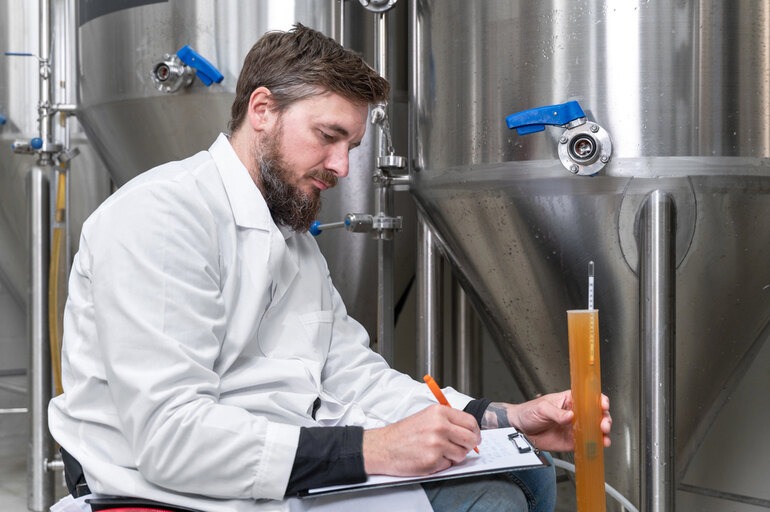
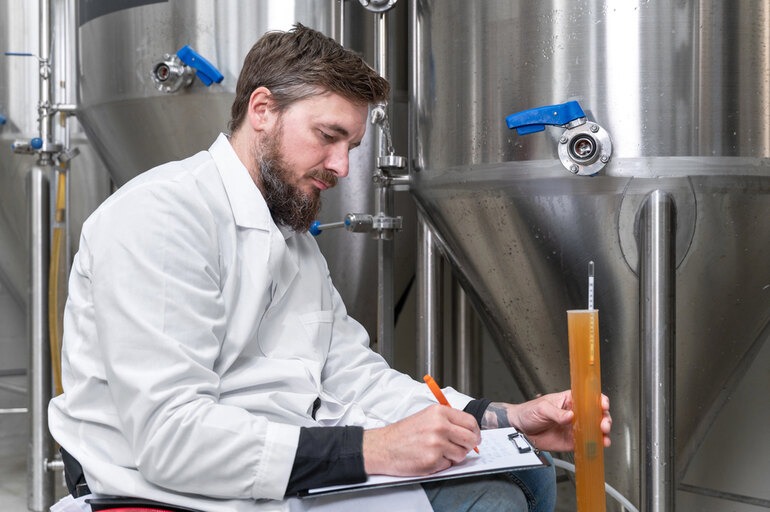
The artwork of manufacturing beer may look like it’s a craft of style, timing, and custom. For each batch, there’s a mathematical system of measurement for mass, quantity, temperature, acidity, sugar focus, and losses. To a STEM scholar, the brewery can look like a giant lab the place there are numbers to calculate and parts to fastidiously monitor and clarify what lastly results in the glass. For these within the science behind beer and what cautious measurements contribute to the standard and character of a beer, that is an additional layer of curiosity in brewing. Entails commercial-scale synthesis, biology, physics, engineering, statistics, and knowledge evaluation.
Brewing Begins with Ratios and Conversions
A brewing recipe consists of a set of managed ratios. Brewers measure the grain weight towards the quantity of water, the hop mass towards the quantity of wort, and the quantity of yeast towards the focus of sugars. These relationships ought to stay secure at elevated manufacturing, very like the cautious stability behind a seasonal launch when a brewery brings a well-known beer again with its supposed character intact. A recipe for 20 litres gained’t merely be scaled as much as 2,000 litres. Scale-dependent modifications in warmth loss, evaporation, and mixing are potential. Kilograms, litres, levels Celsius, and grams per litre are additionally utilized by breweries. A single conversion mistake can change the bitterness, color, fermentation charge, or alcohol share.
Mass Stability Tracks Supplies and Losses
Mass stability follows a easy rule. Materials coming into a course of should go away, stay contained in the gear, or develop into waste. Throughout mashing, crushed grain and water enter the system. Liquid wort later leaves, whereas moist grain stays as a by-product. Water additionally disappears by absorption or evaporation. Brewers examine anticipated output with precise measurements. A big distinction could reveal leakage, poor drainage, inaccurate sensors, or extreme boiling.
Turning Brewery Knowledge right into a Analysis Paper
STEM programs usually ask college students to show manufacturing calculations into a proper analysis paper quite than submit equations alone. That job requires a transparent query, dependable sources, defined assumptions, and logically structured arguments. A report may examine water use, extraction effectivity, power demand, or fermentation losses throughout a number of brewery programs. College students should then join numerical outcomes with engineering choices and environmental penalties.
Throughout busy laboratory weeks, some learners contemplate on-line analysis paper help by EduBirdie whereas managing a research-driven writing course of throughout a number of technical sections. Any submitted work ought to nonetheless match the course temporary, quotation guidelines, and institutional coverage. Knowledge should additionally stay traceable to credible research or direct measurements. Cautious checking issues as a result of a chic conclusion can not restore incorrect items, weak proof, or unsupported assumptions. The strongest brewery papers mix correct arithmetic with clear explanations of what every outcome means.
Particular Gravity Estimates Alcohol Manufacturing
Particular gravity is a comparability of the densities of the wort or beer being brewed and water. The sugars which might be dissolved within the wort make it heavier earlier than it’s brewed. Because the yeast makes use of up these sugars, the density will lower. Brewers maintain a report of unique gravity and last gravity. The distinction permits the estimation of the quantity of sugar transformed to alcohol and carbon dioxide.
Essentially the most steadily used approximation is:
ABV = (131.25 × Unique Gravity) – Ultimate Gravity)
Unique gravity is 1.050, last gravity is 1.010, and the estimated alcohol content material is roughly 5.25 p.c. Knowledge from density measurements are oblique details about the within of the fermenter. Whereas a brewer wouldn’t be capable to see each sugar molecule his yeast is harvesting, he can monitor the density to gauge progress and see how a batch goes. The readings make the invisible seen and measurable, making the science of brewing extra actual for anybody .
Effectivity Creates an Optimization Downside
A brewing recipe consists of a set of managed proportions. Brewers do a comparability of the quantity of grain, the quantity of water, the mass of hops, the quantity of wort, and the quantity of sugar. These relationships will should be maintained throughout occasions of manufacturing enhance. A recipe for 20 litres gained’t simply merely be scaled as much as 2,000 litres. Scale-dependent modifications in warmth loss, evaporation, and mixing are potential. Different items utilized by breweries embody levels Celsius, litres, grams per litre, and kilograms. An error in a conversion can change the bitterness, color, fermentation charge, or alcohol content material.
Warmth Switch Controls Brewing Temperatures
Temperature impacts virtually each brewing stage, making temperature management important for consistency. Mash enzymes work inside chosen ranges, whereas yeast responds strongly to modifications throughout fermentation.
Heating calculations usually start with:
Q = m × c × ΔT
On this case, the change in warmth power is represented by Q, the mass is represented by m, the precise warmth capability by c, and the temperature change by ΔT. The equation is used to calculate the power wanted for both heating water or wort. Actual programs additionally lose warmth from their partitions and pipes, in addition to the encircling air. These losses are accounted for by the engineers. Vitality can be utilized to assist scale back gas use by the warmth exchanger by using high-temperature liquid.
Fermentation Produces Curves, Not Straight Strains
Biology talks about fermentation; arithmetic describes its behaviour. In yeast, the cells multiply and eat sugars, giving off carbon dioxide, and create flavour compounds. Preliminary development of yeast may be exponential. Later, there aren’t sufficient vitamins, and extra alcohol slows it down. Brewers management gravity, temperature, pH, and CO2 emissions. All batches could have their charge of progress indicated by the slope of every of the graphs. If a sudden plateau, it’s unlikely that this is because of yeast exercise, temperature too low, or inadequate vitamins.
pH Demonstrates Logarithmic Considering
One of many features of brewing chemistry that’s essential is pH. The exercise of enzymes may be influenced by the pH of the mash, and the exercise of yeast cells and the soundness of flavours are influenced by the pH of the fermented product. The pH scale relies on a logarithmic quantity system. It will increase the variety of H+ ions by an element of 10 because the pH modifications from 5 to 4. Brewers modify pH by mineral additions, water remedy, or food-grade acids. Correct dose calculation and testing are wanted to regulate the focus. Responses is probably not predictable if buffering compounds are used, and estimates must be in comparison with measurements.
Statistics Protects High quality and Consistency
One profitable batch can not show {that a} manufacturing system is dependable. Breweries want measurements from many batches. High quality groups could monitor alcohol content material, color, bitterness, carbonation, fill quantity, and fermentation time. Imply values describe typical efficiency, whereas normal deviation reveals variation. Management charts separate regular fluctuation from uncommon occasions. An excessive outcome could sign gear failure.
A gradual pattern could reveal put on, contamination, or altering substances. Testing each bottle could also be unattainable, so employees examine a pattern. Statistical strategies assist decide whether or not it represents the complete manufacturing run. A one-millilitre overfill appears minor, however it turns into costly throughout a whole bunch of hundreds of containers.
Why Brewery Arithmetic Issues to STEM College students
Ratios information recipes, mass balances monitor supplies, and density measurements estimate alcohol manufacturing. Warmth equations help temperature management, whereas development curves describe fermentation. Logarithms clarify pH, and statistics defend consistency throughout packaged merchandise. Collectively, these concepts kind one sensible mathematical system. Arithmetic connects bodily processes, organic behaviour, high quality choices, and enterprise prices. A brewery turns summary ideas into measurable outcomes.
Beneath the craft is a system of manufacturing, replete with equations, experiments, and reasoning. The basics help brewers in understanding how substances work together with one another, the best way to maximise effectivity in every a part of the method, and the way they will make knowledgeable modifications from one batch to the following. That diploma of precision is a peek into the method of each beer for inquisitive imbibers.